
PPWR, REACH, CLP, Regulation (EC) No 10/2011, the ban on Bisphenol A and Teflon… The packaging sector for fragrances and flavours (F&F) is evolving within an increasingly demanding regulatory framework.
By the end of 2026, a large proportion of Food and Fragrances packaging could prove to be non-compliant on the EEA market… Today, regulatory pressure weighs on professions whose expertise has been built up over centuries and for which France, and the Grasse region in particular, are recognised worldwide.
1. A constantly evolving regulatory framework for fragrance and flavour packaging.
Whether it is the European PPWR (Packaging and Packaging Waste Regulation), progressively applicable from July 2026, or food contact regulations, health and safety requirements are making the choice of packaging materials for fragrances and flavours more complex.
The bans on Bisphenol A (BPA) and Teflon (PFAS) illustrate this trend: initially driven by France, these restrictions are now European.
Technical feasibility of testing
The extremely low thresholds set by the legislation (such as the REACH Regulation) are gradually leading to bans, with implementation phased between 2026 and 2030. PPWR and REACH therefore act in a complementary manner: the former regulates packaging, the latter chemical substances, with a shared objective of protecting health and the environment.
However, with regard to REACH, a purely analytical approach, molecule by molecule, does not always reflect the reality of finished products, because the sum of the interactions of isolated molecules is not equivalent to that of the entire product, particularly for phenolic compounds or complex compositions such as essential oils.
The time variable
Furthermore, the sectors are under pressure: the time available to carry out testing and the industrial feasibility of producing substitute materials come up against the timelines of politics and regulation.
The materials used in flavours and fragrances are under regulatory pressure, and there is not enough time to work specifically on packaging.
Reference texts: Regulation (EC) No 10/2011 and metals regulations
Players in the F&F sector use up to 3,000 references, each with specific uses and therefore specific packaging. To facilitate the implementation of testing, the legislator defined standardised protocols by introducing representative simulants (water, ethanol, acetic acid, olive oil) to verify the absence of interaction and validate the food-contact suitability of materials in accordance with Regulation (EC) No 10/2011 (plastic packaging), under precise conditions of use (temperature, duration, etc.).
With regard to aluminium packaging, France relies on Decree No 73-138 of 12 February 1973 for its use in food contact. If the metal is coated with a polyester varnish (BPA-free), Regulation (EC) No 10/2011 then applies, highlighting the overlapping complexity of the regulatory frameworks (see diagram).
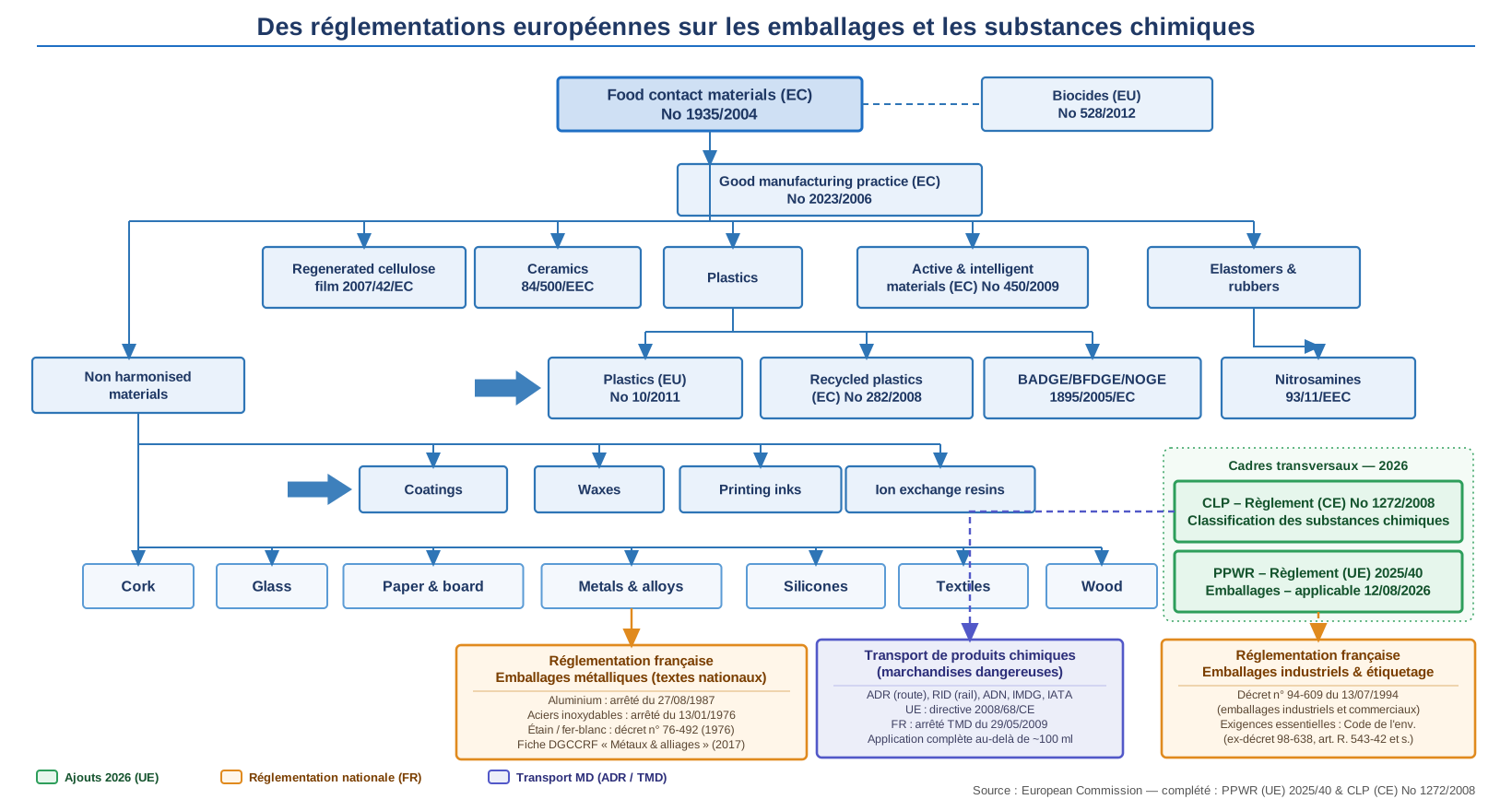
The key role of professional associations and certifications
The trade unions representing the fragrance and flavour professions, as well as those of the packaging industries, help manufacturers and their customers identify the types of tests to be carried out and relay industrial concerns to legislators. Each country implements tools to simplify procedures: in France, the ANIA certificate is a good example of a form designed to simplify the qualification of packaging suitability for food contact, enabling manufacturers to complete a declaration of compliance for food contact.
REACH and CLP: scientific demonstration serving the essential oils sector
The implementation of the REACH Regulation therefore mobilised the perfume plant sector for a long time. In force since 2007, REACH identifies and lists chemical substances that are prohibited or likely to be restricted. The profession mobilised to convince and demonstrate that the hazardousness of lavender essential oil, which contains 800 molecules, could not be classified based on the presence of a single hazardous molecule. The REACH registration process, which is declarative and purely analytical, molecule by molecule, does not always reflect the reality of finished products, because the sum of the interactions of isolated molecules is not equivalent to that of the product as a whole, particularly for phenolic compounds or complex compositions such as essential oils.
The principle of chelation, also known as sequestration or complexation, described and rationalised by Shriver and Atkins (“The chelate effect is the increase in the stability of complexes…”), is a physicochemical process that forms a complex in which the central atom binds to neighbouring atoms through at least two bonds.
This principle demonstrates that certain molecular associations, such as those found in lavender, can neutralise individual associated risks, thereby justifying an overall assessment rather than a systematic molecule-by-molecule breakdown analysis.
This chemical principle of chelation makes it possible to demonstrate that lavender molecules associated with one another neutralise each other. Raising awareness among the authorities through scientific demonstration helped convince legislators to amend the European CLP Regulation on the classification, labelling and packaging of substances and mixtures, under the authority of the European Chemicals Agency (ECHA), which issued a derogation on 5 December 2023 concerning essential oils and the hazard labelling of their packaging.
In these processes, the perfume plant and essential oils sector relies on:
The IFRA Standards, which classify materials according to the following criteria:
- Chemical family / CAS number, conditions of use and dilution, filling conditions
- Shelf life and use cases, REACH classification (…) and the Cosmetics Regulation, with the guiding objective of maintaining the organoleptic characteristics of the essential oil or fragrance in order to better inform legislators and users.
This extensive work of classifying and characterising substances enables the sector to respond more effectively to constantly evolving regulatory requirements.
2. Major industrial complexity in the face of new requirements
Faced with this changing regulatory environment, manufacturers of raw materials for fragrances and flavours are taking action to achieve compliance, but some choices are impossible: using a bottle or drum with a Bisphenol N-I varnish (not intentionally added) is compliant, but it is necessary to ensure that this substitute varnish is resistant to the most aggressive essential oils and does not release microparticles, or even large pieces of varnish, into the essential oil.
A considerable volume of testing
To ensure that the new packaging materials selected work with their molecules, companies in the F&F sector must implement tests at a lower cost. To do this, they must:
- target, among 2,000 materials to be packaged, the most difficult cases (cinnamon, citrus fruits, etc.).
- simplify testing in order to relieve the burden on their own laboratory capacity
- pool testing with industry peers or their packaging suppliers by sharing information through simple ageing tests designed to verify the absence of content-container interaction.
The resources required in terms of laboratory testing hours are considerable, and the means range from a simple oven to chromatography or even spectrography equipment. With testing periods ranging from one month to one year, it is necessary to anticipate and select the right materials to test. Time pressure tends to force the adoption of simple, minimum solutions.
The long timeframe of the profession compared with the short timeframe of regulation
The fragrance and flavour professions date back to the origins of humankind
and moving from wood to terracotta, to skin or bladder, from stone to glass, from iron to copper, from copper to glass, then from glass to tinplate, then from glass to aluminium, and then from bare aluminium to coated aluminium… took generations!
The aromatic substance can be stored for years, while compliance deadlines are short: for the PPWR, it is July 2026, whereas the validation of a new material or packaging involves changes in use that are sometimes measured in centuries.
Conversely, regulations impose fixed compliance deadlines, with some adjustments and derogations, but the deadlines are no more than five years. We are dealing with a short timeframe in contrast to expertise developed over the long term for thousands of materials and dozens of packaging materials, throughout centuries of evolution in the professions involved in packaging aromatic substances.
In other industrial sectors, there are illuminating examples of new constraints that emerged when packaging materials were changed, such as the replacement of metal with plastic in the market for plant protection products used in agriculture.
Following a general shift from metal to plastic, new risks and constraints emerged.
- Incineration of plastic packaging
The sector had to introduce a packaging treatment process by organising the rinsing, collection and incineration of contaminated plastic packaging. These additional costs had not been anticipated, given that the metal packaging previously used for smaller quantities of chemicals, whether aluminium or tinplate, is easier to compact and more readily recyclable.
- Issues relating to permeation through plastic walls and the risks of microparticles spreading into the environment were little studied at the time, and these defects gradually became apparent.
These new constraints associated with use emerged even though these new packaging solutions had been presented as technically and economically ideal and were supported by the government, the ministry and professional sectors.
This risk currently exists at a time when new packaging and materials must be tested so that the industry can comply, for example, with the absence of Bisphenol A in packaging for flavours.
Legislators must have a detailed understanding of the issues when drafting laws and seek to make the sectors accountable in order to protect consumers and the environment, with a vision extending not five years but twenty years into the future. The sectors must raise awareness of these issues and often need to learn to work at European level rather than only at local and national levels.
We have therefore just seen that the professional flavour and fragrance sector was able to defend the interests of the essential oils sector effectively in Brussels and establish a genuine dialogue with legislators: for lavender, the outcome of this approach enabled the lavender sector to remain sustainable through a change in hazard classification.
This demonstrates the effectiveness of a legitimate collective organisation in establishing a debate with legislators. Nevertheless, this success would not have been possible without the leadership of major private-sector players, which, thanks to their economic influence, were able to unite the profession and convince legislators.
3. Content-container interactions: the challenge of chemical compatibility for manufacturers
Changing packaging material: what are the constraints?
The concepts of interaction and compatibility with a new packaging material arise when there is a specific compatibility issue involving a new material to be packaged and/or when compliance with new regulations is required.
By prohibiting certain chemical components of materials intended for food contact, such as PFAS and Bisphenol A, and provided that this material change is approved for packaging the products concerned by the regulations, it is necessary to find a manufacturer capable of supplying the new material, or the new finish, in sufficient quality and quantity within the allotted time and at a reasonable price.
Ideally, the new material, or its modification, should be introduced for the long term, given the costs and difficulties associated with any change. Packaging manufacturers often supply several different markets in order to achieve sufficient production volumes and must meet different technical and regulatory requirements depending on whether they serve the automotive, food or fragrance sectors. The substitute material must be affordable. In the plastics industry, for example, recycled material can be more expensive than virgin material. Is sourcing recycled material technically relevant and financially sustainable? The choices are difficult given the responsibilities placed on packaging manufacturers. To avoid these risks, packaging users may be tempted to transfer entire sections of their fragrance and flavour distillation, extraction and composition activities to regions where the regulations apply little or not at all. These regions are becoming new production hubs for essential oils and fragrances intended for consumers in those same regions. The question can be taken to the extreme: should 3,000 products be retested with the new packaging material, or should raw materials and fragrances be produced differently and, above all, elsewhere? Regulation therefore comes into direct conflict with the profession and may ultimately not merely regulate activities, but “exile” them outside the territory in which the regulation applies.
It is therefore vital to reach a consensus between legislators and industry stakeholders regarding the risks of relocating activities affected by new regulations, which in practice results in reduced competitiveness in export markets, where European companies face competitors that are not subject to the same constraints.
What criteria should be followed when changing packaging material?
Knowledge of chemistry is necessary, and records of previous tests are not always available. Furthermore, the conclusions may vary depending on the circumstances. Take water, for example, which may have a more or less pronounced effect on metal packaging depending on its hardness.
The compatibility data listed in the guide published by the American aluminium association indicate, on the WATER page, that “drinking water may corrode aluminium to a greater or lesser extent, but this phenomenon varies depending on the amount of minerals present in the water. This pitting phenomenon decreases over time.” In response to the question “Is there an interaction?”: at the beginning of the transport or storage of water in aluminium pipes, the answer may be yes, and then no, once slight oxidation reduces and eventually eliminates the phenomenon. Storage time is therefore essential, and this shows that the choice of packaging must be made with full knowledge of the facts, for example by selecting aluminium packaging with an internal coating, free from BPA, for products containing a high proportion of water, such as flavours.
MAJOR TRENDS FROM THE CONSUMER MARKET ARE SPREADING TO INDUSTRIAL PACKAGING.
The evolution of consumer packaging materials shows how manufacturers have been able to make new forms of packaging, often single-use, available to the general public. For water bottles, non-standardised, washable glass bottles blown by a single craftsman were replaced by PET bottles manufactured in tens of millions on the same machine.
The resources used to manufacture packaging became immense during the Industrial Revolution, and improvements in sanitary conditions and comfort created a need for the mass production of consumer packaging.
Advances in the medical field, such as the development of vaccines and pasteurisation, led to the development of new types of packaging, such as sterilizable pharmaceutical bottles and pasteurisable milk cartons. Major trends in consumer packaging strongly influence decisions concerning professional packaging materials… and new regulations are also introduced as scientific progress is made in order to protect consumers.
These constraints arising from risks to the general public spread from major clients, such as multinationals in the cosmetics, pharmaceutical and food sectors, to upstream industrial sectors, according to regulatory priorities that are sometimes impossible to validate scientifically. To address this issue, French legislators introduced the precautionary principle.
The influence of B2C on B2B must be considered with caution, as there is a risk of confusion between material requirements for diluted consumer products and those for materials intended for raw materials and concentrates.
It is therefore crucial to define the specifications clearly, taking into account, for example, the pressure resistance or drop resistance of packaging when it is required to contain 40% recycled material.
To comply with this requirement, the use of the packaging throughout the supply chain must be reconsidered. For example, it may be necessary to accept that it cannot be transported by air because it can no longer pass the UN tests governing the air transport of the material concerned.
These different levels of requirements and sometimes contradictory performance expectations must be clearly distinguished when changing industrial packaging as a result of regulatory developments.
Technical aspects to consider and the risks associated with changing packaging materials:
Technical considerations take precedence when dealing with valuable, sensitive, expensive or hazardous products, for which three aspects must be considered:
- The content: the packer must have a detailed understanding of the product’s chemical composition, its classification according to ADR recommendations governed by the UN, its flash point, and the packaging and use instructions, including weight and the maximum quantity authorised for transport.
- Physical storage and use conditions: the ability to store the product in a cool environment at -5°C or to heat the material in its original packaging, such as aluminium for a water bath. Storage duration plays a major role in the choice of material. Aluminium is preferred for long-term storage and for storing the most valuable products.
The main objective is to preserve the organoleptic and performance characteristics of the fragrant material for as long as possible.
- Interaction: in a fragrance or essential oil, fragrant substances seek to adhere and escape. Part of the essence permeates and spreads, while another part becomes an odour. Specialists in citrus essential oils know this well: the terpenes present in citrus extracts can attack coatings, while cinnamon, thyme and geranium essential oils are considered difficult to package. This means that once the appropriate material has been identified, it is not changed!
Therefore, the more sensitive the material, the more difficult it is to change the packaging material and the greater the risk. There is therefore considerable conservatism among professionals in the flavour and fragrance sector, and their customers are often resistant to change.
This increases the level of requirements even further when a change nevertheless has to be made! The packaging supplier, as well as the user, is exposed to risk and does not have the luxury of several attempts: if the choice of material causes a leak or creates a risk, the customer may be lost!
4. Content-container interactions: what should be investigated and how should they be measured?
Identifying the origin of undesirable substances.
Two situations may arise: either we know what to look for during the test, as in the case of Bisphenol A, or we do not know what to look for…
- We know what to look for:
When studying an interaction phenomenon, we observe and look for traces of the undesirable substance or substances in the product and seek to demonstrate whether or not they originate from the packaging.
Thus, if a company must commit to the absence of PFAS (Teflon) or Bisphenol A, it is faced with new regulations, and it is essential to identify clearly what the company must implement to demonstrate its compliance.
In this specific case, the industry expects the legislator to specify the testing conditions and the precision of the measurements to be carried out. Once this has been defined, it is necessary to analyse the volume of testing and anticipate a budget.
Given that the detection devices required to carry out precise measurements are not necessarily available within the company, outsourcing to laboratories must be considered, which once again requires the company to anticipate its needs well in advance.
- We do not know what to look for, or we are looking for many different substances, because the substance may come from the contained product or from the container.
Taking the example of guaranteeing the absence of allergens in essential oils, fragrances, cosmetic products or food products, it is necessary to clearly understand
the regulatory requirement.
Allergenic substances may therefore be naturally present in plants
(for example, nettles) and throughout the process, from the soil into the plant, from the petals into the essential oil, from the essential oil into the fragrance, and from the fragrance onto the skin or from the flavouring into the body. Demonstrating the absence of allergens in raw materials intended for flavours and fragrances is a major challenge.
Indeed, natural or synthetic compounds may or may not be allergenic depending on the type of population exposed and even the region of exposure.
The contained liquids carry traces of the packaging with them in minute quantities that are difficult to measure, even when the packaging material is compatible and extraction and rectification have purified the material sufficiently. The materials used, whether oak barrels, stainless steel or glass, have proven themselves in their respective sectors, such as wine and cooking, as has porcelain.
Interactions may therefore originate from the packaging material and/or from the packaged substance. In a study intended to demonstrate the absence of interaction, the names of the chemical substances being investigated must therefore be clearly determined.
However, when packaging materials have to be changed, it is necessary to determine whether the change could create new risks and whether other substances could migrate into the contained material. It is therefore necessary to know what to look for and to be able to measure it precisely.
Precise measurement: the example of Bisphenol A
Let us take Bisphenol A as an example: how can the traces present in flavour compositions be measured? The European legislator sets the maximum limit for traces of Bisphenol A in food products at 1 mg/cc. However, measurement capabilities are limited at most industrial sites; only advanced laboratories can work with such low detection limits. Measuring minute migrations from packaging that is itself located in an environment where these substances may already be widely present requires advanced laboratory equipment, such as a mass spectrometer capable of precise measurements, whereas in most cases laboratories are equipped with conventional chromatography devices.
As this type of equipment is only very rarely available among packaging manufacturers, which generally carry out physical resistance or leak-tightness tests, they must therefore use specialised laboratories for compatibility testing.
Responsibility and interaction: who is responsible in the event of a problem?
If traces of prohibited substances are found in the packaging and migrate as a result of an interaction, who is responsible? The legislator does not hesitate to withdraw suspect packaging from the market if doubts arise. According to recent studies of case law in the EEA,
“the interweaving of regulations defines the responsibilities between the packaging manufacturer and the product packer so that (i) each link in the chain is responsible for the compliance of the products it manufactures with the regulations applicable at its stage of production, (ii) it must communicate this compliance information to its customer, and (iii) cooperate with the customer by providing the information necessary to enable the customer to verify, in particular, container-content compatibility in light of the regulatory constraints applicable to the finished products placed on the market by the customer.” (Source: BBLM Avocats study, 2016).
In this case, the stakeholders are legally required to prove that they cooperated and exchanged relevant information. Liability is incurred if packaging known to present a risk is used.
Furthermore, professional federations, together with the main manufacturers of packaging materials, have published documents listing the level of compatibility between materials and reference substances grouped into major categories, such as SOLVENTS and REAGENTS, and their packaging materials: HDPE, EVOH, SOARNOL, PP, ALUMINIUM, 316 STAINLESS STEEL, etc. Specific studies by major chemical families are also available in the literature.
Responsibility therefore lies in the quality of the information exchanged between stakeholders throughout the chain, bearing in mind that concealing information is punishable.
CONCLUSION
Only professional organisations and governments, alerted by industry leaders, can make progress by mobilising resources. Rushing the implementation of new rules, combined with the continuous pursuit of lower packaging production costs, may create new health risks if sufficient resources are not devoted to studying interaction phenomena.
Strong technical knowledge in chemistry and physics, as well as biology and agronomy, is essential to provide legislators and policymakers with relevant information that can help protect citizens and the environment.
At the same time, economic issues must be taken into account at a global level, not only at the French or European level. The lack of technical solutions to ecological and health challenges confronts both industries, packaging and aromatic materials, with difficult choices.
The consequences can already be anticipated:
Will the many natural and synthetic materials used in the world of fragrances and flavours survive these developments? In a field where recipes and formulas require slow maturation, it is clear that decisions to change packaging materials are complex and their consequences irreversible, while the same industry players must also manage changes and a reduction in the range of ingredients available for creation.
Production sectors will have to make difficult choices between risking the performance of the packaging material in order to comply with regulations and preserving the valuable contents.
This represents a real challenge for companies producing commodities or low-priced compositions, which do not have sufficient resources to finance increasingly costly regulatory compliance in Europe.
However, we can trust the professionals in the packaging and fragrance and flavour sectors, who are passionate about their work, to find solutions, provided that they have sufficient resources to meet the challenge.
This will undoubtedly be easier for higher value-added sectors, such as fine fragrance, but it will require lower value-added sectors to find creative solutions.
Bertrand d’ARRENTIÈRES,
and the Tournaire teams.