
The issue of preserving aromatic substances arose as soon as their use became widespread, at the heart of religious practices, 5000 years BC.
Originally, perfumery was exclusively based on the use of natural plant and animal products. Towards the end of the 19th century, with the development of organic chemistry, the perfume industry and synthetic aromas were born. Over time, the increase in combinations and the infinite possibilities of blends quickly highlighted the importance of carefully selecting packaging.
Thus, the type of material is carefully chosen, becoming a key element in the preservation, transport, and diffusion of perfumes. The role of the bottle is shaped around the notions of ergonomics, aesthetics, and the control of interactions with the precious substance.
The continuous pursuit of preserving the organoleptic characteristics of raw materials and compositions therefore requires a demanding selection of packaging.
We will first examine the history and the fundamental functions of packaging for aromatic substances, before then addressing the gradual evolution of the materials used to manufacture this packaging, at the heart of the evolution of the perfumery professions.
I. HISTORY OF THE FIRST PACKAGING SOLUTIONS AND THEIR FUNDAMENTAL FUNCTIONS
1. THE FIRST PACKAGING SOLUTIONS
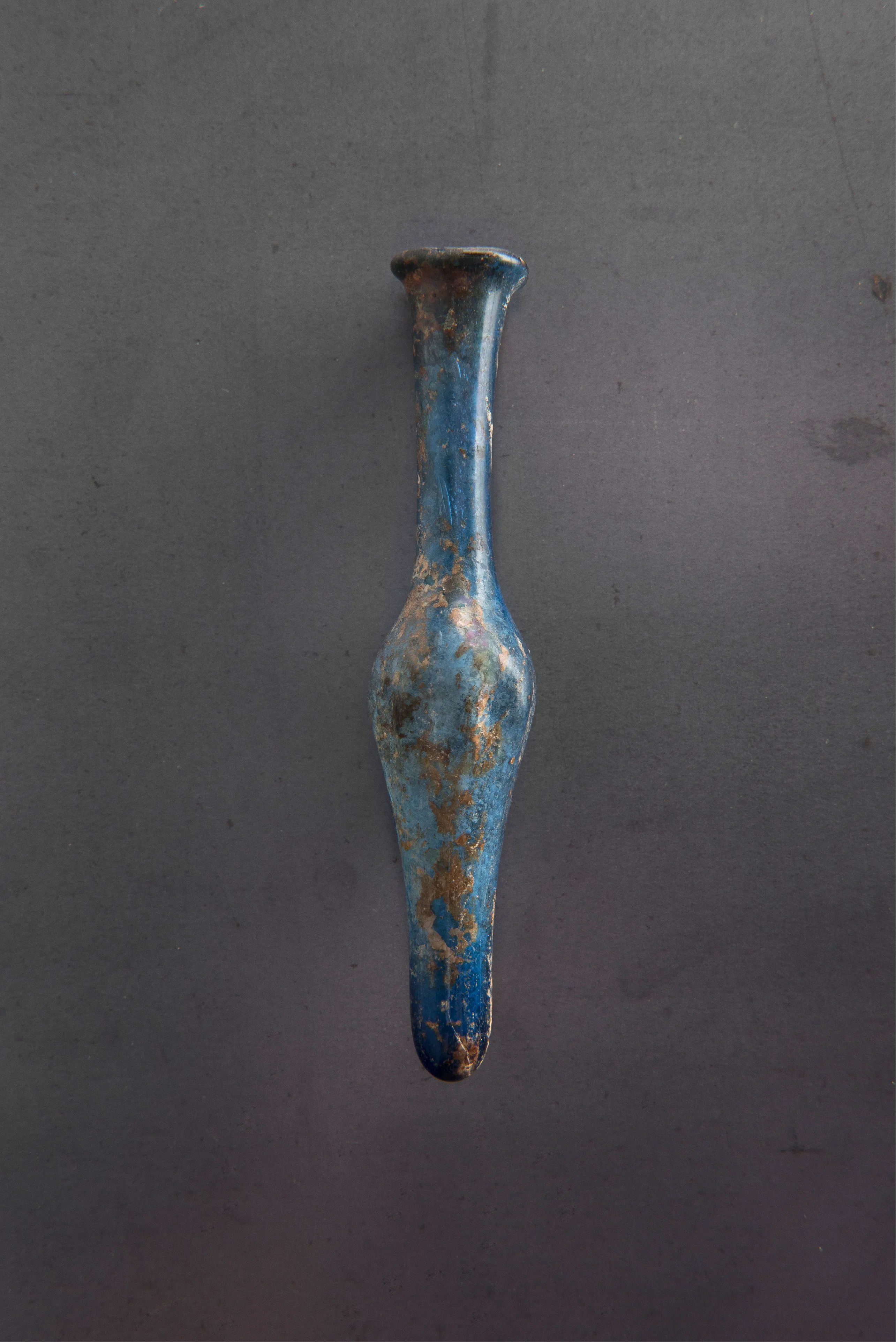
What packaging materials were available when the first uses of perfume appeared? Copper, bronze, iron, stone, ceramic, terracotta, glass, wood, animal skins, bladder, bone… These materials were those used to make everyday objects.
Originally, aromatic substances were burned to diffuse smoke during embalming rituals, a practice that overlapped with the use of colored pigments at the emergence of painting in prehistoric times. Thus, what “per fume” (through smoke, from the Latin “per fuma”) the atmosphere was burned, allowing offerings to be made to the gods, with prayers rising along with the smoke.
Shavings, powder: burning perfume originated from the use of fire. Just as it was necessary to know how to create embers and preserve them, the precious shavings, powders, then balms and oils had to be carefully stored and protected.

The bottle, the jar, the box, and skin containers are all packaging solutions derived from everyday objects, depending on the viscosity and quantity to be stored. Their use follows the evolution of human lifestyles: from nomadic to sedentary. Their spread is linked to travel, and later to the famous Silk Roads; perfume was transported alongside gold and salt, playing a central role in the history of human trade and religions. Use cases influenced the choice of materials and the most suitable form of packaging.
Empirical observation also quickly led to certain conclusions: myrrh and incense, ointments and creams must not evaporate, leak, or seep through the container walls. It must be possible to access the entire contents, and in case of mishandling, the container should resist shocks. A distinction emerged between transport packaging and packaging for static use. In the Middle Ages, the Crusaders brought back to Europe the practice of perfuming gloves and clothing. One can imagine the situations in which perfumes found themselves while traveling in a chest on a mule, hanging from a knight of the Temple’s baldric, or in the hands of a physician from the Faculty of Montpellier, exposed to temperature variations, shocks, and attacks.
Perfume and its packaging were placed in tombs alongside the deceased’s favorite objects, whether a Merovingian warrior or a Pharaoh. The packaging had to be beautiful, worthy of the leader, sometimes reflecting the personality of the one who used it in earthly life.
Today, many of these concerns remain unchanged! The different natures of products, their viscosity, transport conditions, and temperature variations throughout the supply chain are still at the heart of packaging choices.
Reusing packaging once empty is possible, but it must be possible to clean it, or to refill it with the same material or fragrance. If the bottle has traveled far, the new delivery will be made in new packaging.
For the packaging of a “pure” raw material, there are also variations depending on the quality of the perfume plants and the uncertainties of harvests; new bottles will need to be filled for each production cycle.
Finally, very early on, the need to ensure product integrity emerged. It is essential that the “customer” is truly the first to open their precious bottle. Security ties, seals, manufacturer-branded paper, and wax seals were quickly used to guarantee the product and its origin. The function of tamper-proofing is therefore very ancient!
2. THE FUNDAMENTAL FUNCTIONS OF PERFUME PACKAGING
Four essential functions of packaging for perfume raw materials can be identified.
2.1. Preservation
First and foremost, the perfume must be protected from external aggressions without being contaminated by the packaging material. The user and their environment must also be protected, unless the fragrance is intended to be diffused through the packaging. Thus, presenting a perfume in packaging that is already soiled on the outside is not acceptable.
2.2. Application
Perfume packaging must be practical at every stage, whether for transport from the place of manufacture to the place of use or for presentation to the customer. This applies to fumigation disinfection during religious ceremonies (baptisms, weddings, embalming, funerals, for example), purification rituals, or more everyday uses. In short, there are as many use cases as there are performance requirements.
The use of perfume is often a social marker, a sign of belonging to a specific group. Its use could signify a Prince, a Noble, a Bourgeois, or medical practitioners.
It is therefore easy to understand that spilling it, getting it all over one’s hands, or finding the contents contaminated or evaporated could be disastrous for users. Linked to the sacred as well as to prestige, the correct bottle must be used. The notion of ritual still persists today, often in a more secular approach.
2.3. Aesthetics
Close to the consumer, and especially when perfume is a social marker, the aesthetics and appearance of the packaging become an integral part of the product. The look and style of the bottle become rooted in popular imagery and in travel narratives to distant lands, where precious essences and perfumes are found.
These are presented in refined and beautiful containers that ensure both functional use and prese
2.4. Security
This aspect can be approached on two levels.
The first is the limitation of interactions between the contents and the container. If the customer notices that the perfume has lost part of its olfactory function, trust between the customer and the perfumer is broken. Such alteration may be interpreted in different ways: the customer may think that the perfumer deliberately diluted the formula to increase margins, or chose lower-quality packaging to reduce costs, assuming the difference would go unnoticed.
The second, essential aspect is to guarantee the integrity of the product. Thus, cases that can be locked prevent breakage of glass, terracotta, or porcelain containers. Above all, beyond protecting the packaging from shocks, they ensure the integrity of the perfume by restricting access to the product. The tamper-proof nature of the container is therefore also a key element of safety.
II. A SLOW EVOLUTION OF PACKAGING MATERIALS FOR AROMATIC SUBSTANCES
1. TRADITIONAL EMPIRICAL KNOW-HOW
Tradition is omnipresent in the know-how of perfumery.
The first perfumers, apothecaries, and alchemists knew precisely which packaging material to use for plants, essential oils, and various powders. Whether preparing perfumes or masking a poison with a pleasant scent, each jar and each vial had its own use and label. Thus, each type of bottle corresponded to a specific category of products, implying an education of the customer, who associates a material or a fragrance with a type of packaging. Changes in perfume composition were very gradual, and the same applies to bottles.
There are certainly traces of packaging materials in ancient perfumes, as well as residues resulting from the transformation of natural substances into perfume: sand, limestone, wood, integral parts of olfactory performance as long as they remain imperceptible or controlled. The risk of having a contaminated product is unacceptable, especially if, for example, the perfume is part of an ointment or an essential oil used in treatment.
As a result, due to risk awareness, professionals made few changes to their packaging. With centuries of experience, knowledge was passed down regarding the risks of interaction between different materials and raw materials, perfumes, and aromas. The impact on smell or taste is known and tested whenever a new substance or formula appears. Choosing the right packaging is critical in the profession, and mastering this knowledge takes a long time.
Just as wine drunk from a silver cup does not taste the same as from a plastic glass, the material containing a perfume or aroma is expected to be perfectly neutral. For fragrance and flavor creators, if taste or smell is altered by the material, composing with pure ingredients cannot be done properly. A perfumer cannot create if their preferred composition no longer smells the same—just as a painter may struggle to mix colors with a dirty or unfamiliar palette.
2. METAL AND GLASS: A SLOW EVOLUTION
Materials are important, and once a use is well established, conservatism prevails. Only a shortage of materials, new conditions of use, or more recently, new regulations will lead to changes in packaging.
With the birth of perfumery in the East and its spread to Europe, the profession of perfumers evolved, combining traditional approaches with modernity. Packaging thus became more specialized, with a fundamental distinction between “process” packaging and final packaging. Packaging solutions in Antiquity ranged from bone to glass, including metals, wood, and ceramics. These often regional forms of packaging reflected the customs and practices of each area. They evolved through a slow process of standardization, notably with the adoption of the metric system (France in 1790).
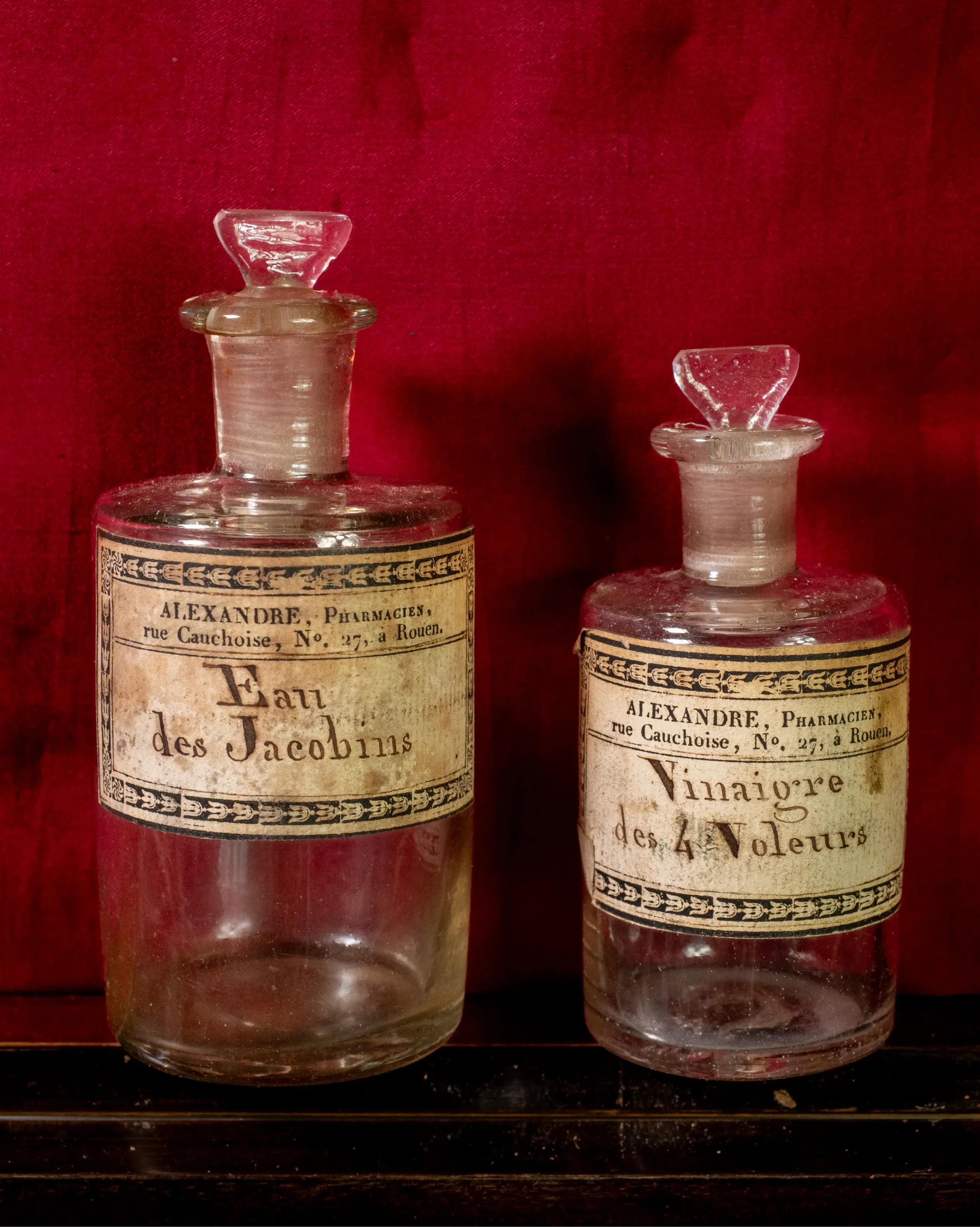
Perfume production remained artisanal throughout the 19th century. Bottle sizes varied from one worker to another, as items were handmade in small batches, with each worker carrying out the entire process from start to finish.
In the 18th and 19th centuries, glass was produced piece by piece, and each artisan had their own style. This material was the main type of packaging used by raw material houses in Grasse to transport their essential oils. However, if glass broke, significant financial losses occurred, and there was a risk of contaminating the rest of the goods, not to mention the danger of fire.
The development of trade routes led to changes in the quantities transported. By the end of the 18th century, packaging was shipped from Grasse and Marseille by boat to Paris. Improvements in road networks at the beginning of the 19th century, followed by the emergence of railways, made it possible to connect Paris within a few days from 1850 onwards. Transported quantities decreased while frequency increased. As a result, a wide range of capacities was required, from 15-gram samples to 25 kg or more. Several packaging materials appeared in orders from major Parisian perfume houses, which sourced both fragrance compositions and raw materials from Grasse.
The choice of packaging also often depended on the client, as did the quantities used. The transformation of the artisanal glove-maker-perfumer profession into an industrial perfume industry in Grasse led to the emergence of a profession with its own specific tools. The goal was to find the best solutions to avoid contaminating either the product or the external environment, which allowed metal to take on a central role, initially copper.
Drawing on the expertise of coppersmiths, it became widely adopted as a preferred solution for storage and transport. The tin-lined copper “estagnon,” made from the same material as stills, became common, along with a wide variety of pouches and accessories used for creation, handling, mixing, and multiple transfers of compositions and essences, as well as for transport and sampling. Copper packaging dates back to the earliest ages of metallurgy, with the development of treatments such as tinning, the application of a thin layer of tin to protect copper from oxidation.
At the beginning of the 20th century, advances in metallurgy led to the emergence of a new material: aluminum. Derived from bauxite, which is extremely abundant in the Earth’s crust, this material offered decisive advantages. Aluminum is both strong and lightweight, representing a major improvement over glass, and it is cheaper to produce than tin-lined copper. Its excellent chemical neutrality and natural barrier to UV light make it an ideal material for sensitive products such as essential oils, compositions, and perfumes. Today, its recyclability and modularity appeal to an industry increasingly focused on environmental protection and ecosystem preservation. Not to mention the economic advantage: aluminum is less expensive than copper and enables large-scale industrial production.
3,3x
lighter than copper
75%
aluminum produced since 1880 is still in circulation
5%
energy from primary production is required for recycling
After the First World War, Tournaire invented the one-piece aluminum can, and the Grasse estagnon shifted from copper to aluminum for large-scale international storage, transport, and sampling. Trade routes expanded, and it became necessary to safely transport materials from all over the world. The Grasse “travelers” understood this and standardized the use of aluminum estagnons during their journeys and at their various sourcing locations. Thus, in the upstream part of the profession, glass gave way to aluminum for the industrial transport and storage of compositions and raw materials. With a major technological innovation—the seamless, one-piece aluminum estagnon, it became the standard in a thriving industry.
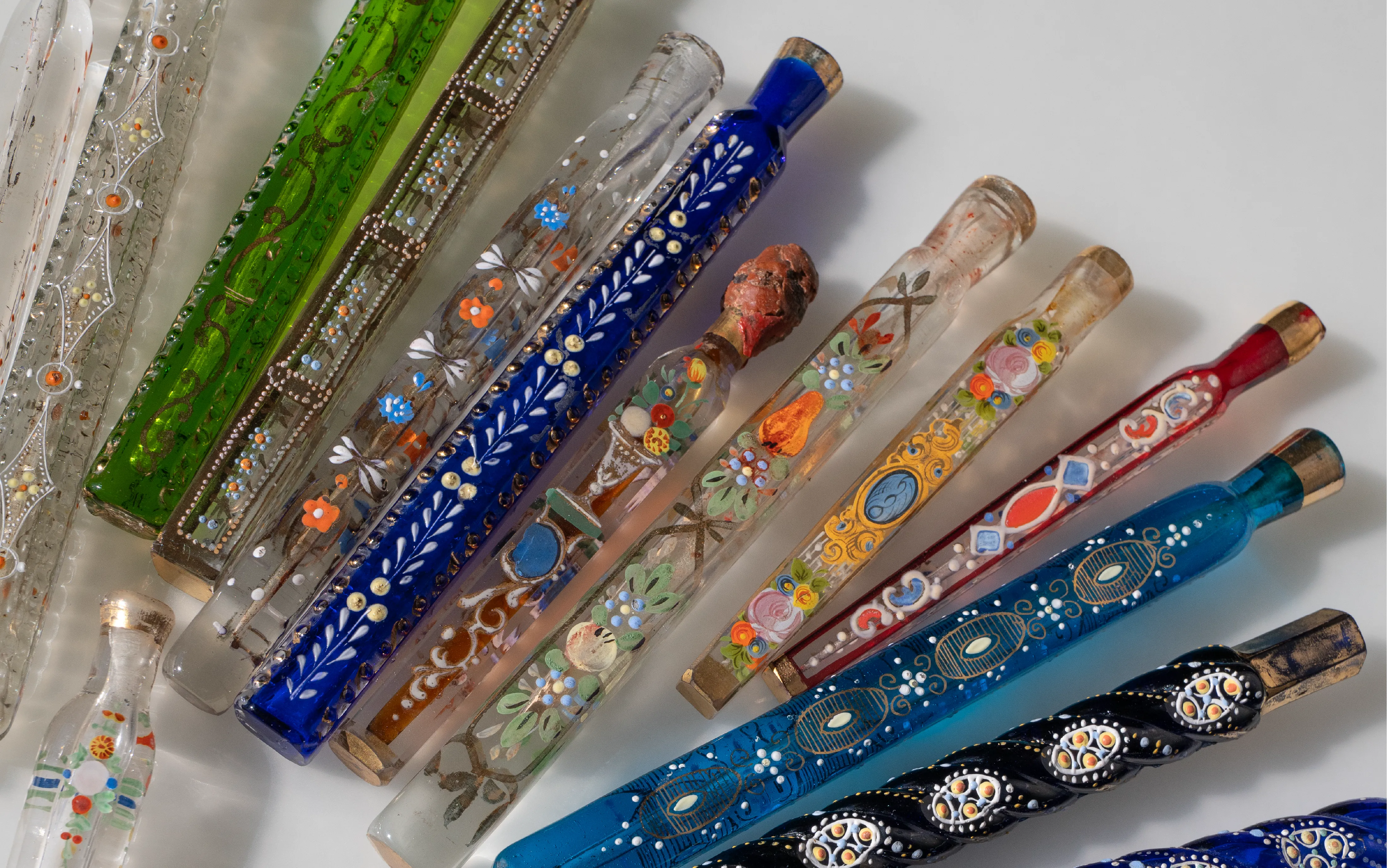
Glass, however, remained predominant for presenting finished products: eau de toilette, perfumes, eau de parfum… With its aesthetic qualities and technical advantages, it continues to play a key role, particularly in sampling.
Today, apothecary-style glass necks are the reference for perfumers’ organ setups. For the final perfume consumer, the bottle plays a crucial role and enhances the fragrance. Decorated and crafted bottles are chosen, following fashion trends.
With the arrival of plastic in the second half of the 20th century, low-cost packaging solutions emerged for bulk products and industrial-use aromas. The jerrycan, developed through plastics engineering, made it possible to have inexpensive storage containers for less valuable products intended for rapid use in very large quantities.
Today, the perfume industry has access to a very wide range of packaging materials such as steel drums, stainless steel, and aluminum. However, increasingly numerous standards are reshaping the profession. New regulations present challenges at every stage of the usage chain, whether concerning aromatic molecules or the materials used, going beyond the scope of both perfumers and packaging manufacturers.
It is necessary to reconcile regulatory and technical requirements with corporate social responsibility commitments made by companies and their end customers, while remaining competitive. These underlying trends, aimed at preserving resources, require the design of packaging that is easily recyclable and reusable.
The profession, strengthened by its heritage and its close connection to natural raw materials, is already aware of these challenges and their cost. New solutions are now available, which will be explored in a future article.
Bertrand D'ARRENTIÈRES, and the Tournaire teams.
Photo credit: Fragonard